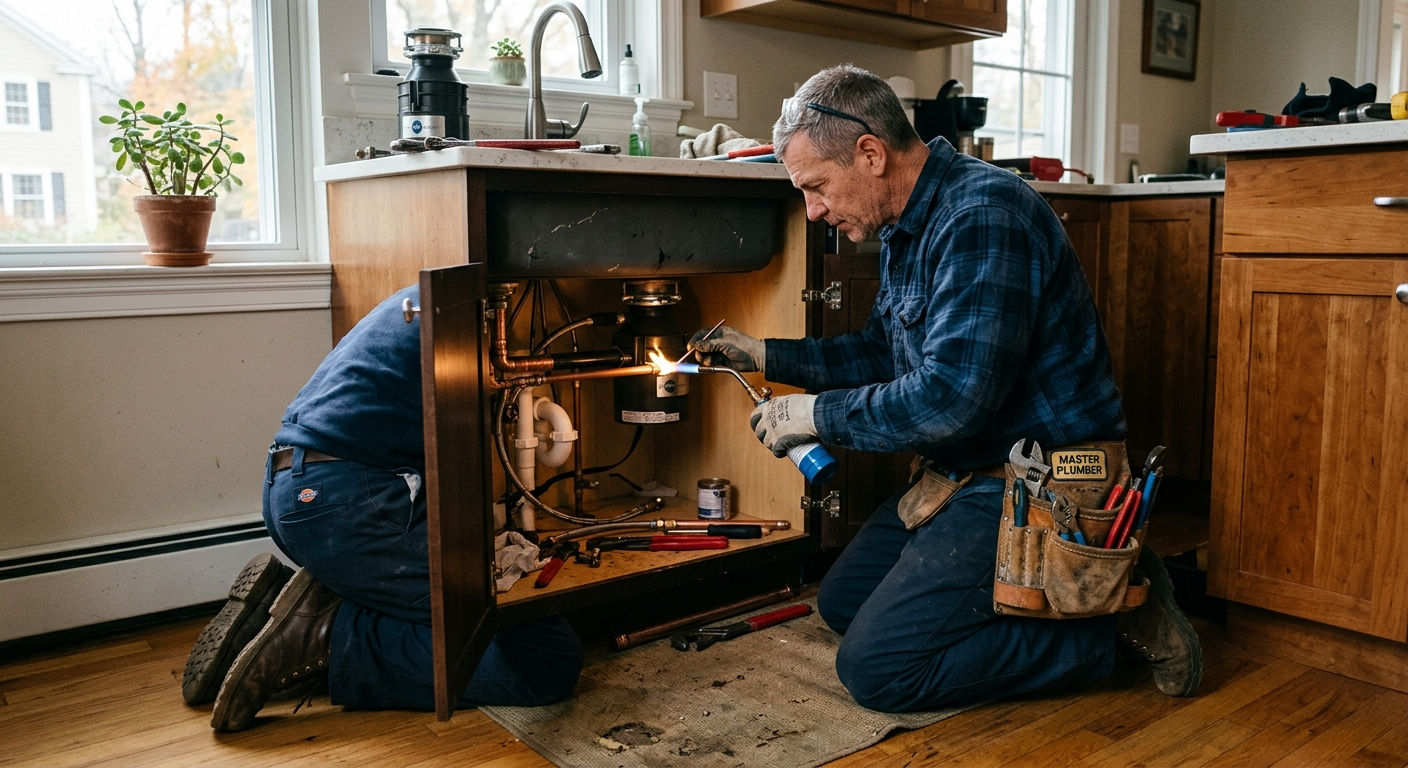
HVAC Contractor Insurance in Massachusetts: What You Need to Know
HVAC contractor insurance in Massachusetts: what every tech and owner needs
If you run an HVAC business in Massachusetts, you are working in one of the most liability-dense trades in the state. You are entering customers' homes and commercial buildings, handling refrigerants, working near gas lines, and putting equipment on rooftops or in tight mechanical rooms. One refrigerant leak, one gas-related fire, one employee injury on an icy job site in January, and the financial fallout can be severe enough to close a small operation for good. HVAC contractor insurance in Massachusetts is not a formality. It is the financial backbone that lets you take jobs, pull permits, and build a real business without betting everything on every service call.
This post covers what coverage you actually need, what Massachusetts requires, and how the right insurance program fits together for HVAC contractors of every size, from a solo technician in Springfield to a multi-crew operation serving Northampton, Holyoke, and the wider Pioneer Valley.
Why HVAC work carries above-average risk
Most trade contractors deal with property damage and bodily injury exposures. HVAC contractors deal with those plus a set of hazards specific to heating, cooling, and ventilation systems that most insurers scrutinize closely.
- Combustion and gas line work: A faulty furnace installation or an improperly capped gas line can cause a fire or carbon monoxide incident. These claims are large and often disputed.
- Refrigerant handling: Improper handling of R-410A or legacy refrigerants can cause property damage and regulatory penalties. Some policies exclude refrigerant-related losses by default.
- Rooftop equipment installs: Flat-roof commercial installs in Massachusetts mean working at height, often in winter conditions. Falls are a leading cause of workers' comp claims in the trade.
- Completed operations exposure: A system you installed or serviced six months ago causes a loss. That loss happens long after you left the job site, but your policy may still be on the hook if your completed operations coverage is inadequate.
- Indoor air quality claims: Mold, dust, or contaminant complaints tied to ductwork you cleaned or installed can lead to third-party bodily injury claims that are expensive to defend.
These exposures mean a standard "handyman" general liability policy is rarely the right fit. HVAC-specific underwriting looks at your revenue mix, the types of systems you work on (residential, light commercial, industrial), and whether you do installation, service only, or both.
Core coverages in an HVAC insurance program
General liability insurance
General liability (GL) is the foundation of any contractor's insurance program. It covers third-party bodily injury and property damage arising from your ongoing and completed operations. For an HVAC contractor, a typical GL policy carries limits of $1,000,000 per occurrence and $2,000,000 aggregate , though many commercial property managers and general contractors require higher limits before they will let you on a job site.
Pay close attention to the completed operations sublimit in your policy. Some cheaper GL policies cap completed operations coverage at a fraction of the general aggregate, which leaves you exposed when a system you installed last season causes a loss. You can read more about how GL works for Massachusetts contractors on the general liability insurance page.
Workers' compensation insurance
Massachusetts law requires workers' compensation coverage for virtually every employer with one or more employees, including part-time workers. There are no exceptions for small HVAC shops. The Massachusetts Department of Industrial Accidents (DIA) enforces this requirement aggressively, and operating without workers' comp can result in stop-work orders, fines of up to $250 per day , and personal liability for medical costs and lost wages if a worker is injured.
HVAC technicians are classified under NCCI class codes that reflect elevated injury risk (rooftop work, confined spaces, refrigerant exposure). That means workers' comp premiums for HVAC contractors tend to run higher than for lower-risk trades. Your experience modification rate (EMR) over time is the biggest lever you have to reduce those costs. A strong safety program, documented tool-box talks, and prompt reporting of any incident all contribute to a favorable EMR. For a closer look at how Massachusetts workers' comp rates are calculated, see our post on workers' comp rates and cost factors.
Commercial auto insurance
Your service vans and trucks are not covered by personal auto policies when used for business. In Massachusetts, commercial auto coverage must meet the state's minimum liability thresholds, but for an HVAC contractor hauling equipment and employees, higher limits are the standard. A single at-fault accident involving a loaded service van can generate bodily injury claims well above the state minimum. If you hire workers who occasionally use their own vehicles for a job, look at hired and non-owned auto coverage to close that gap.
Inland marine (tools and equipment)
Your manifold gauges, vacuum pumps, refrigerant recovery equipment, and diagnostic tools represent a significant capital investment. Standard commercial property policies cover equipment at a fixed location. Inland marine insurance covers tools and equipment in transit, at job sites, and in your vehicles. For HVAC contractors who move expensive gear from job to job, this coverage is often more valuable than it looks on paper. Learn more at the inland marine coverage page.
Commercial property insurance
If you operate out of a shop, warehouse, or office, commercial property coverage protects your building (if owned), inventory, HVAC parts and supplies, and business personal property against fire, theft, and covered weather events. Massachusetts weather, including nor'easters and the heavy snow loads that can damage rooftop structures in the Pioneer Valley, makes this coverage worth reviewing carefully every year.
Professional liability (errors and omissions)
Standard GL policies cover physical damage and injury. They generally do not cover financial losses your client suffers because your system design, specification, or advice was wrong. If you design a commercial HVAC system that fails to meet building code, or if you recommend a unit that proves inadequate for the space, the resulting claim often falls under professional liability (E&O) rather than GL. As HVAC contractors move into energy consulting, smart-system integration, and design-build work, E&O exposure grows. Review the professional liability page if this applies to your business.
Massachusetts-specific requirements and licensing
Massachusetts has one of the more structured contractor licensing frameworks in New England. The Office of Public Safety and Inspections (OPSI) oversees several license categories relevant to HVAC contractors:
- Sheet metal worker license: required for ductwork fabrication and installation at certain levels.
- Refrigeration technician license: required for work on refrigeration and air conditioning systems above a certain threshold.
- Oil burner technician license: required for installation and service of oil heating equipment.
- Plumber or gas fitter license: required if your HVAC work involves gas piping or hydronic systems, depending on scope.
Many of these licenses require proof of insurance as a condition of issuance or renewal. Commercial general contractors and property owners in Massachusetts also commonly require certificates of insurance (COIs) with specific additional insured endorsements before work begins. If your insurance program cannot produce a COI quickly or cannot meet a GC's required limits, you lose the job. That is a practical business problem, not just a compliance issue.
Massachusetts also follows the prevailing wage law on public works projects. If you are doing HVAC work on a school, municipal building, or other public project in communities like Springfield or Holyoke, prevailing wage requirements affect your labor costs and, indirectly, your workers' comp exposure. Make sure your insurer and your agent understand the type of work you do.
Optional coverages worth considering
Business owners policy (BOP)
For smaller HVAC operations, a business owners policy bundles GL and commercial property into one package at a price that is typically lower than buying the coverages separately. BOPs are generally available for HVAC businesses under a certain revenue threshold and without high-hazard exposures like industrial refrigeration work. If you qualify, a BOP is an efficient starting point. See how BOPs work on the BOP coverage page.
Commercial umbrella or excess liability
A commercial umbrella policy sits above your GL, employer's liability, and commercial auto limits. If a serious claim exhausts your underlying limits, the umbrella responds. For HVAC contractors working on larger commercial projects or in multi-family residential buildings, umbrella limits of $1,000,000 to $5,000,000 are commonly requested by building owners and general contractors. This coverage is generally inexpensive relative to the protection it adds.
Business interruption insurance
If a fire, storm, or other covered event shuts down your shop or office, business interruption coverage replaces lost revenue and covers ongoing fixed expenses while you recover. In a trade where your trucks and equipment are your revenue engine, losing access to your shop for several weeks can be devastating without this protection.
Cyber liability
HVAC contractors increasingly use field-service software, cloud-based scheduling, and digital payment systems. If your customer data is compromised or ransomware locks your business systems, cyber liability coverage pays for breach response, notification costs, and recovery. Small contractors in Massachusetts are not immune to these attacks. The cyber liability page has more detail on what these policies cover.
Surety bonds
Some Massachusetts municipalities and commercial clients require HVAC contractors to carry a surety bond in addition to insurance. A bond guarantees your contractual performance and is not the same as insurance. If you are pursuing public projects or working with certain GCs, you may need both. See the surety bonds page for specifics.
What HVAC insurance costs in Massachusetts
Premiums for HVAC contractor insurance in Massachusetts vary widely. These are the primary factors underwriters evaluate:
- Annual revenue and payroll: Both GL and workers' comp premiums scale with the size of your business. A solo tech doing $150,000 in revenue will pay far less than a 10-person crew doing $2,000,000 .
- Type of work: Residential service and maintenance is rated more favorably than new commercial construction or industrial refrigeration. The more complex and high-hazard the work, the higher the rate.
- Claims history: A clean loss history is your most powerful tool for keeping premiums reasonable. Multiple GL or workers' comp claims in recent years will push your rates up significantly.
- Policy limits and deductibles: Higher limits cost more. Higher deductibles lower the premium but increase your out-of-pocket exposure per incident.
- Number of vehicles: Each commercial vehicle adds to your commercial auto premium. Driver records also matter.
As a rough benchmark, a small HVAC contractor (one to three employees, primarily residential work) in Massachusetts might see annual premiums in the range of $4,000 to $9,000 for a package that includes GL, workers' comp, and commercial auto. Mid-size operations with commercial work and higher revenue can easily reach $15,000 to $25,000 or more. These are estimates. The only way to know what your specific program costs is to get a quote based on your actual business profile.
Working with an independent agency matters here. A captive agent represents one carrier. An independent agent shops your coverage across multiple carriers to find the best combination of price, coverage terms, and carrier stability for your specific risk profile. That difference in approach can produce meaningful savings and, more importantly, a policy that actually covers you when something goes wrong.
Get the right coverage for your HVAC business in Massachusetts
Family Insurance Group is an independent agency serving HVAC contractors and other trade businesses across the Pioneer Valley and beyond, including Springfield, Northampton, Holyoke, Chicopee, Amherst, and surrounding communities. We represent multiple carriers and compare options on your behalf, which means you get coverage that fits your actual business, not a one-size-fits-all policy.
Our team understands the specific exposures HVAC contractors face in Massachusetts: the seasonal demand swings, the workers' comp complexity, the certificate-of-insurance requirements from commercial GCs, and the licensing landscape that governs your work. You can start by visiting our HVAC technicians industry page to see how we approach coverage for your trade.
Ready to see what a solid HVAC insurance program costs for your business? Request a quote online or call us at (413) 416-1234 . We will review your current coverage, identify any gaps, and compare options from carriers who specialize in contractor risk. No pressure, no obligation, just a straightforward look at what protecting your business actually requires.
Get A Quote
At Family Insurance Group, securing your future is easy. Ready to protect what matters? Contact us for a quick quote and personalized insurance options!
Kelly
Speak to Kelly 24/7
Microphone ready
Start your custom insurance quote
Instant answers to your insurance questions
Schedule appointments or follow-ups
Personal Insurance
From auto and homeowners to renters and umbrella policies, we help protect your family and property. Let’s find coverage that fits your life.
Commercial Insurance
We customize policies for your industry's risks, like general liability and workers' comp, ensuring you can run your business worry-free.
Contact Family Insurance Group
Recent Posts